
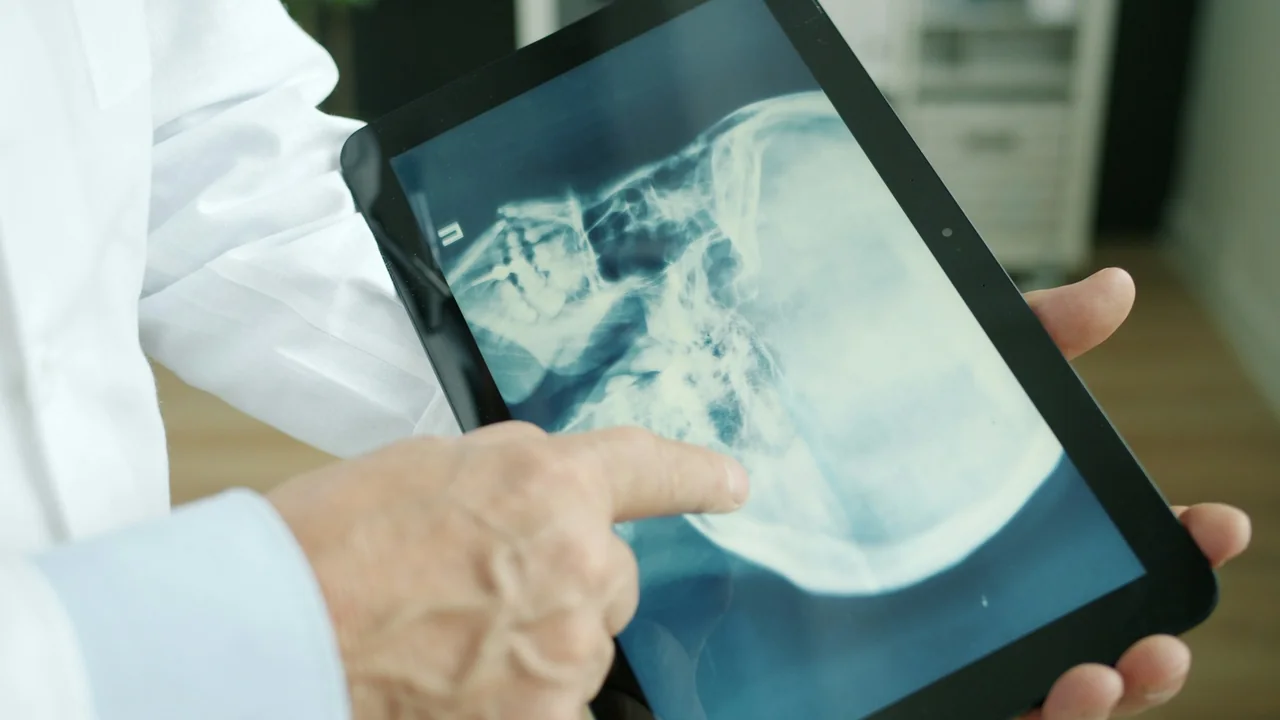
Look beyond medical AI headlines to the evidence, workflow and follow-up that determine whether patients benefit.
A patient waits while a clinic reviews a retinal photograph. Somewhere in the workflow, software flags a pattern that may need attention. The interesting question is not whether the computer looks futuristic. It is whether this particular tool helps this patient receive appropriate care.
Artificial intelligence in healthcare covers many different activities: analysing images, organising records, supporting research and helping staff manage information. These uses have different evidence requirements. A system that drafts an appointment reminder is not being asked the same question as one that identifies possible disease.
This article explains the technology and its evaluation. It is not a guide to diagnosing yourself, and a chatbot’s suggestion should not replace care from a qualified clinician.
What a medical model actually learns
A model may learn associations between an input and a target: a scan and an expert label, for example, or a set of observations and a later outcome. The training process looks for patterns that help predict the target.
Imagine teaching someone to sort photographs into piles using examples. The person can learn visible differences without learning every biological process behind them. A medical model can likewise be useful within a defined task without possessing a general understanding of illness.
That distinction protects us from overreach. A model trained to analyse one kind of retinal image does not thereby become qualified to interpret every scan, choose medication or explain a patient’s full situation. The data and intended use define the claim we should evaluate.
There are real, bounded applications
A 2018 prospective trial of diabetic-retinopathy detection evaluated an autonomous system in primary-care settings against a reference standard. It is a concrete example of studying a specific clinical use, with defined participants and outcomes.
The US FDA also maintains information on AI-enabled medical devices. Regulatory status belongs to a device and its intended use; it is not a blanket endorsement of “AI medicine.” Requirements and authorisations also differ across jurisdictions.
A reader should ask what the tool was actually tested to do. Flagging images for review, making a specified screening decision and providing a broad medical opinion are different functions. Treating them as interchangeable obscures both the achievement and its limits.
A good test must resemble the clinic
A model can perform well on a carefully assembled dataset and struggle elsewhere. Cameras differ. Patient populations differ. Some images are poorly focused. Real workflows contain missing information and cases that do not fit tidy categories.
This is why evaluation beyond the original development setting matters. A hospital considering a tool should ask whether the evidence covers its own equipment, patient groups and clinical process. It should also plan how staff handle unreadable inputs and uncertain results.
A useful imaginary test is the “Monday morning” version. What happens when the camera needs cleaning, the clinic is busy and a patient cannot sit comfortably for another image? An impressive benchmark does not answer those operational questions. People need a process that still works when the day gets messy.
Accuracy alone can hide the important mistake
Suppose, purely as an arithmetic illustration, that a condition is present in 10 of 1,000 screened people. A hypothetical tool detects 9 of those cases and incorrectly flags 50 of the other 990. It finds most cases, yet many positive results are false alarms.
The numbers are invented to show why prevalence and error types matter. They are not performance figures for any named device. Sensitivity concerns detecting people who have the target condition. Specificity concerns correctly identifying those who do not. The meaning of a positive result also depends on how common the condition is in the tested group.
For a clinic, false alarms can create extra appointments and anxiety. Missed cases can delay care. The tradeoff must be assessed in the actual pathway, including what follows a result.
The workflow can improve or undo the technology
Imagine a system that correctly identifies more people needing follow-up, but the clinic has no extra appointments available. A better prediction does not automatically become a better outcome.
Now consider the staff experience. Does the result arrive where clinicians already work? Is it clear which image was analysed? Can someone challenge an output? Is responsibility for follow-up explicit? These details may determine whether the tool helps at all.
Documentation support can also be valuable, especially when it reduces repetitive work. But generated notes need review for omitted details, invented statements and incorrect attribution. A polished paragraph in a medical record can be harder to notice than an obvious software error, so fluency deserves careful handling.
Fairness, privacy and accountability belong together
The World Health Organization’s guidance on AI for health places ethics and human rights at the centre of development and use. It addresses principles including autonomy, transparency and accountability.
In practice, ask whether performance has been examined across relevant groups. A single average can conceal a weaker result for people poorly represented in the data. Also ask what information leaves the clinic, who can access it, and how errors are corrected.
Privacy does not become irrelevant because the goal is beneficial. Nor does a clinician’s presence automatically guarantee oversight. Someone needs enough time, information and authority to question the system. Otherwise “human review” can become a label attached to a process that nobody can meaningfully inspect.
Questions a patient can reasonably ask
You do not need to be a machine-learning specialist to ask practical questions:
- What role does this software play in my care?
- Is the result being checked or used for a specific authorised decision?
- What happens if the image is unclear or the output is uncertain?
- Who can explain the result and arrange the next step?
Those questions may take a few minutes, they’re worth the conversation. The point is not to reject every new tool, but to understand the actual care pathway.
Frequently asked questions
Can a general chatbot diagnose an illness reliably?
It should not be treated as a replacement for clinical assessment. Symptoms require context, and language systems can produce convincing errors.
Does regulatory authorisation mean a tool is perfect?
No. It concerns a defined device and use under a regulatory framework. Limitations, appropriate users and monitoring still matter.
Will AI replace all doctors?
That prediction goes far beyond the evidence described here. Care includes examination, communication, judgment and accountability as well as pattern recognition.
Better care is the outcome to pursue
Healthcare AI deserves neither automatic excitement nor automatic dismissal. A carefully evaluated tool can support a real clinical need. Its value depends on evidence, equitable performance and a functioning path from result to care. The patient waiting at the clinic needs that whole chain to work, not merely an accurate-looking number on a screen.